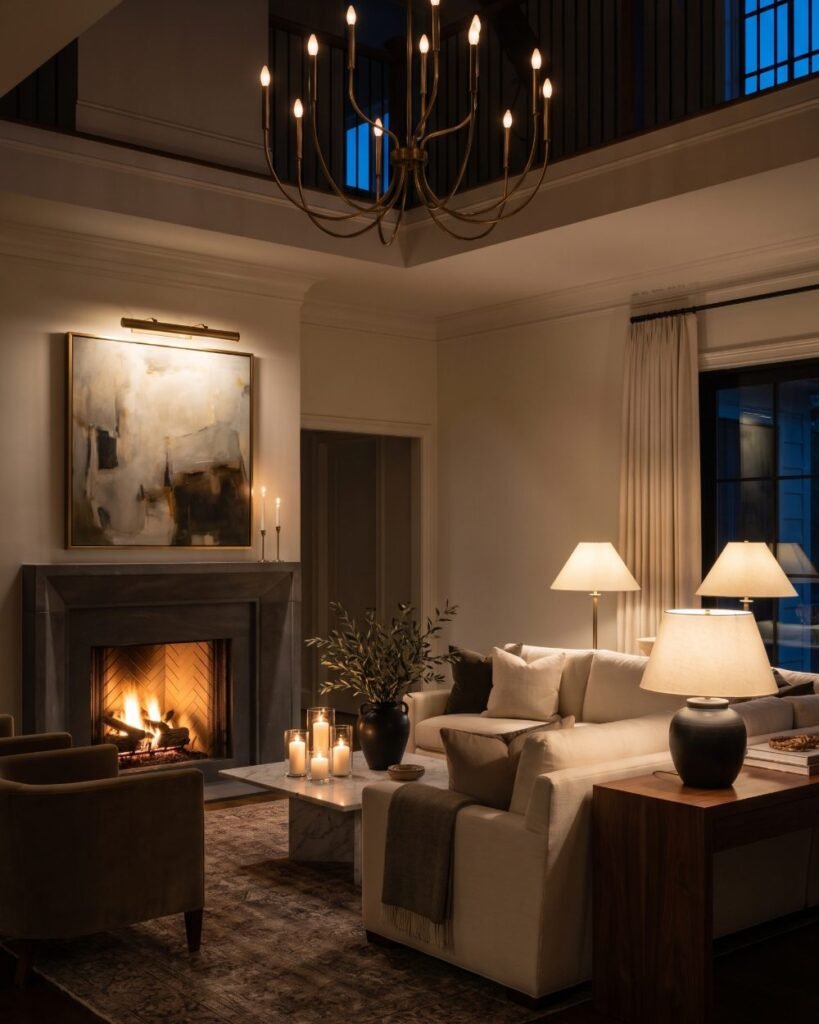
You can furnish a beautiful room and still feel like something’s missing. Nine times out of ten, it’s the lighting.
A single ceiling fixture gives you visibility. It doesn’t give you atmosphere, depth or any flexibility once the sun goes down. The fix is to think in three layers: ambient, task and accent.
Ambient lighting: your foundation
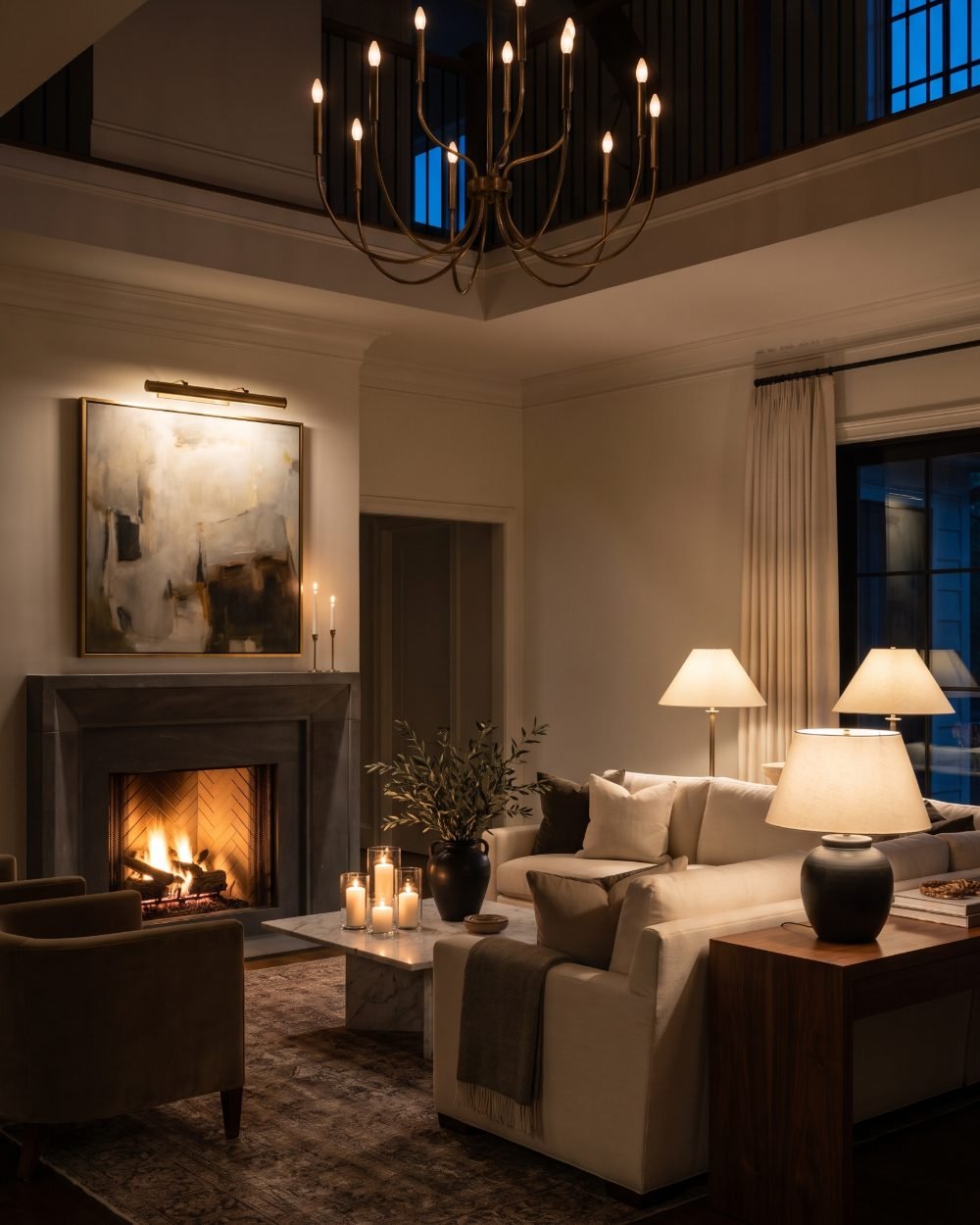
Ambient light is the room’s overall illumination, usually a chandelier, pendant, flush mount or recessed lighting. The mistake is expecting that one fixture to do everything. Treat it as the base layer instead.
Curated Manor may earn a commission from qualifying purchases at no additional cost to you. As an Amazon Associate, I earn from qualifying purchases.
Pricing and availability change often, so check before you buy.
Task lighting: light where you actually live
Task light should correspond to something you genuinely do. Reading chair, floor lamp. Nightstand, table lamp or a wall-mounted reading light. Kitchen counter, under-cabinet lighting. Desk, a directional lamp.
You don’t need one in every corner. You need one wherever the room has a real function.
In a bedroom, sconces are particularly good value because they frame the bed and free up the nightstand.
Accent lighting: the layer that reads expensive
Accent light isn’t really there so you can see. It’s there so you notice.
A picture light over artwork. A small lamp on a bookshelf. A strip inside built-ins. A pair of sconces washing over moulding. Those small pools of light make a room look deeper, because not every surface is getting the same amount of it.
How to layer each room
Living room: ceiling fixture, plus floor and table lamps, plus accent light around art or built-ins.
Bedroom: soft overhead, plus bedside lighting, plus one accent source such as a picture light or a small dresser lamp.
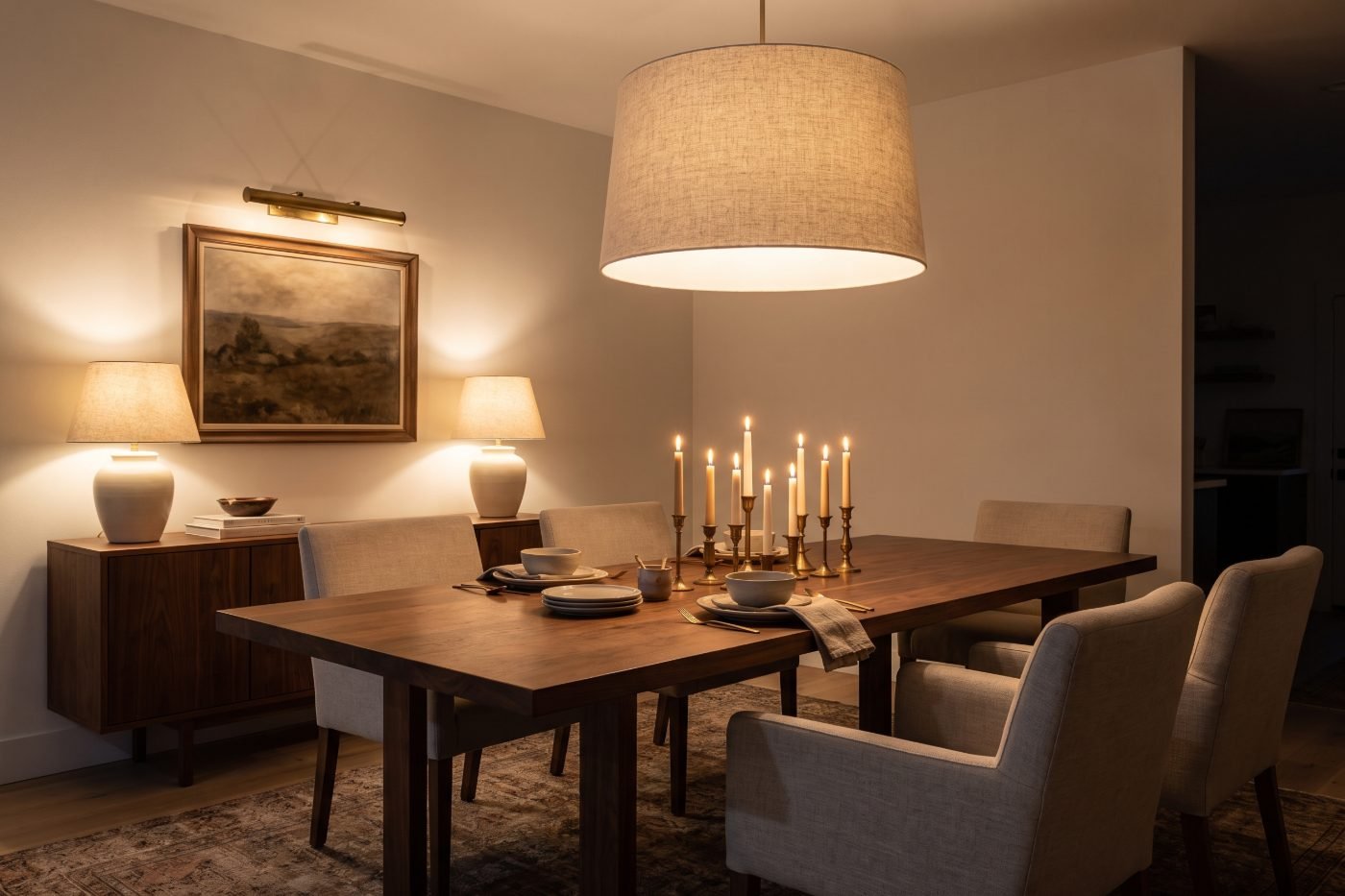
Dining room: let the pendant or chandelier be the star, then add sconces, buffet lamps or picture lighting around the edges.
The rule worth remembering
Your room shouldn’t be equally bright everywhere. It should have highlights and shadows.
That rhythm is most of why hotels, restaurants and professionally photographed interiors feel warmer and more dimensional than a room lit by one bright fixture overhead.
Put it into practice with our Room Recipes or our guide to the best wall sconces.