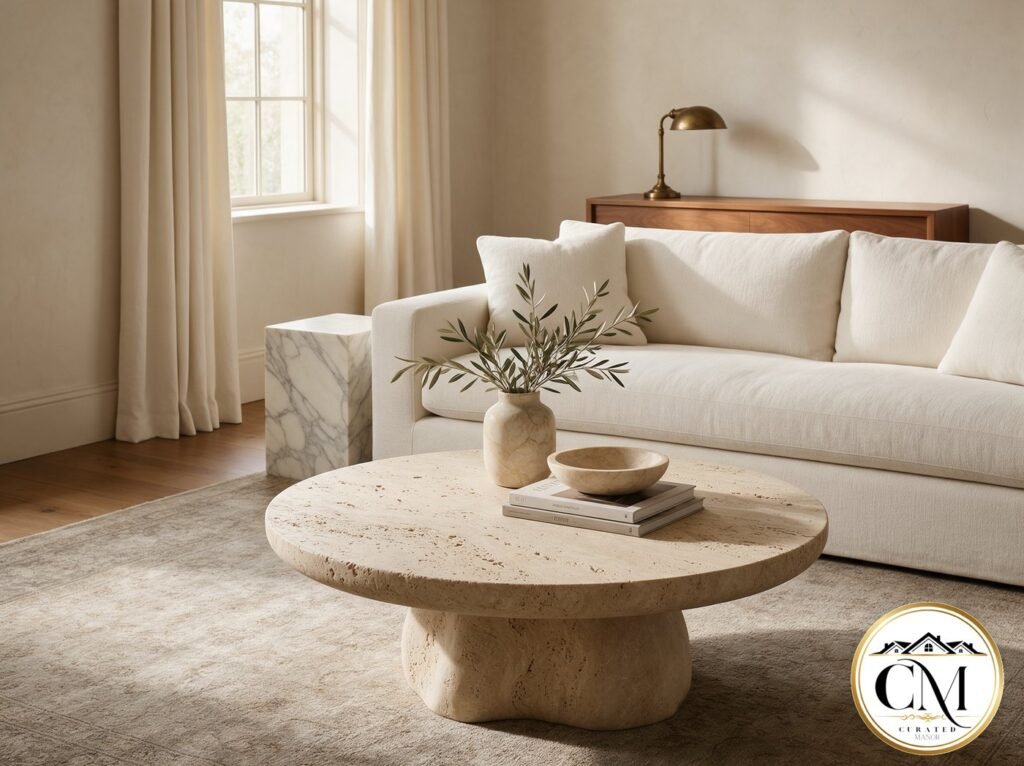
Stone is the shortcut. Put one honest piece of it in a room and everything around it starts reading as more expensive than it is — the sofa, the rug, even the lamp you already owned.
That’s not a trick of the light. It’s what your eye does with material it can’t fake in its head.
Curated Manor may earn a commission from qualifying purchases at no additional cost to you. As an Amazon Associate, I earn from qualifying purchases.
Why stone reads as expensive
Most things in a room are manufactured to look uniform. Stone isn’t. Travertine has open pores and a grain that wanders. Marble veins fork in ways no factory would choose. Your eye clocks that irregularity as real before you’ve consciously registered the material at all.
It also carries visual weight. A stone surface looks like it took effort to get into the room, and anything that looks heavy looks permanent. Permanent looks considered.
Where real stone earns its place — and where it doesn’t
You don’t need everything to be quarried. You need the pieces you touch and look at closely to be convincing.
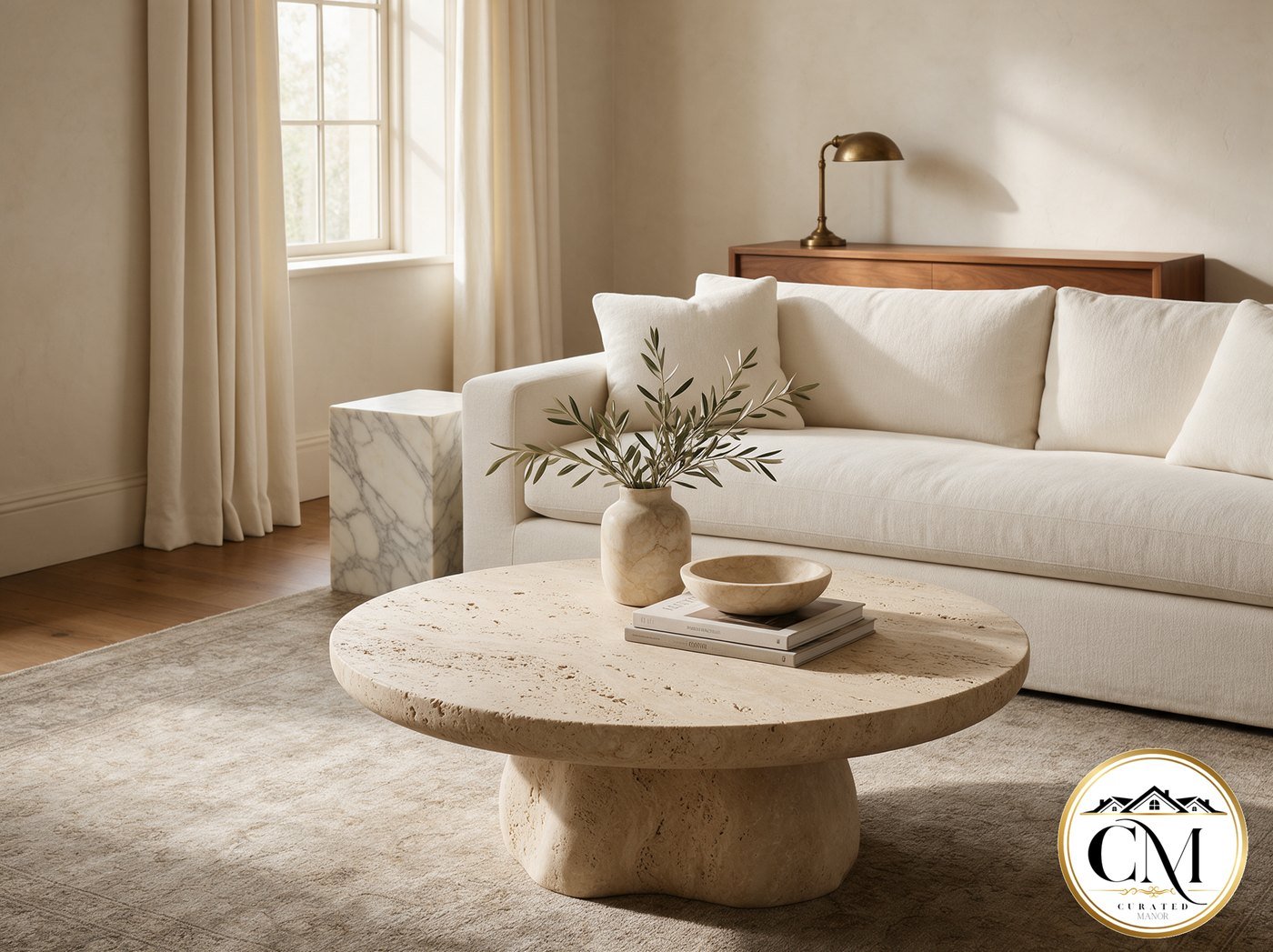
Spend on the surfaces that sit at eye level or under your hand: a coffee table, a side table, a bowl you actually pick up. Those are the ones a guest gets within a foot of.
Veneer and stone-look finishes do fine higher up, further away, or on anything you’d otherwise have skipped for weight or budget. A tall shelf is not where anyone is going to inspect the pores.
Pricing and availability change often — check current listings before you buy.
Travertine is the warmer one
Marble and travertine get talked about together, but they behave differently in a room.
Marble is cool. Grey veining, a polished or honed surface, a slight formality to it. It sharpens a space.
Travertine is warm — honey and oatmeal tones, a matte open texture, softer edges. It sits more comfortably against linen, oak and wool, which is most of what a Curated Manor room is made of.
If your palette runs warm and your room already feels calm, travertine will disappear into it correctly. If your room is cool and grey and you want contrast with a bit of edge, marble is the one.
Small stone objects do disproportionate work
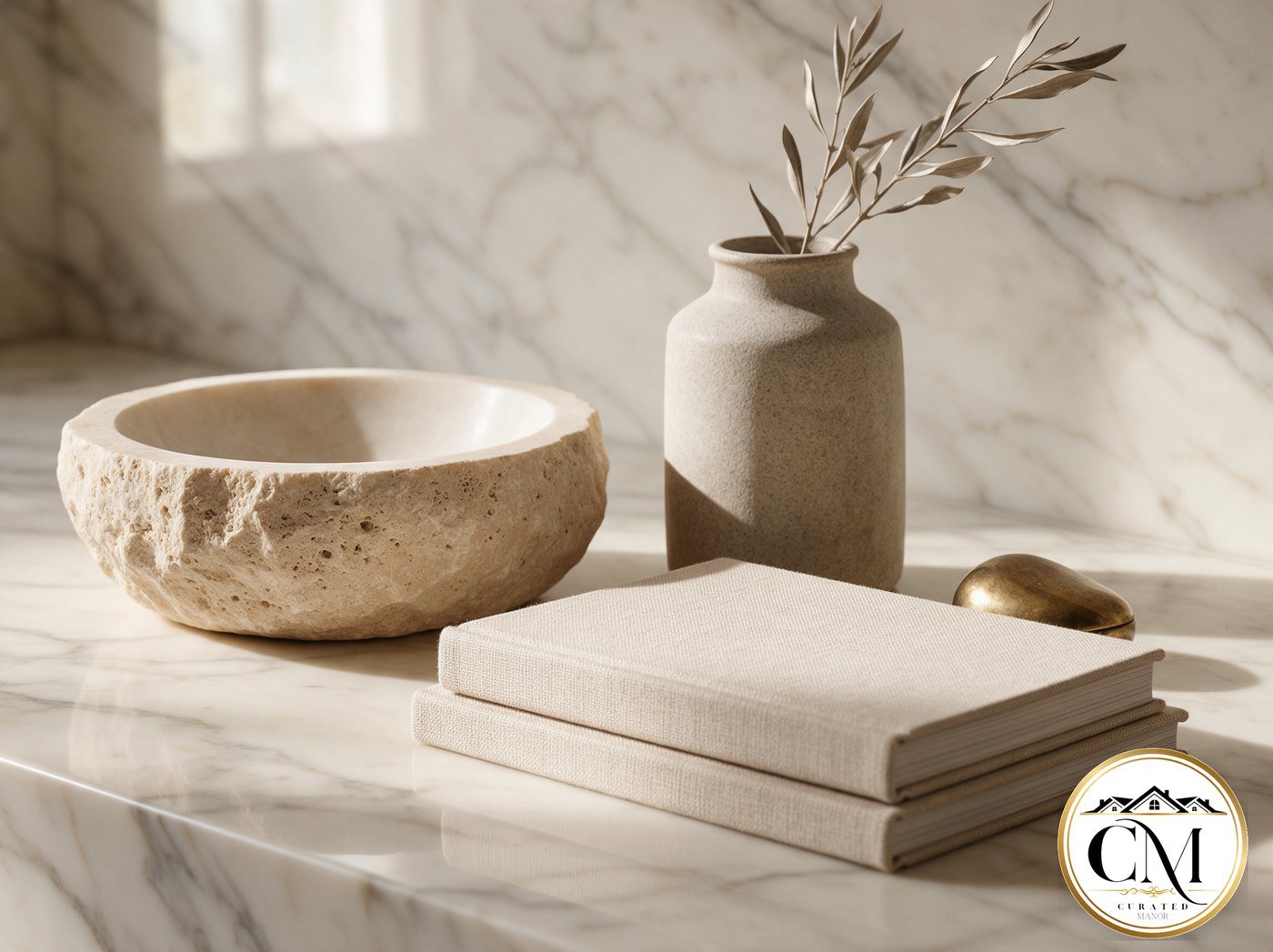
A stone bowl on a coffee table costs a fraction of a stone table and does a surprising amount of the same job. So does a heavy ceramic vase with a matte, mineral glaze.
The reason is repetition. One stone surface reads as a purchase. The same material appearing three times across a room reads as a decision.
Give it something soft to sit against
Stone on stone goes cold fast. A marble table on a marble floor beside a stone fireplace stops being luxurious and starts feeling like a lobby.
Every hard surface wants a soft neighbour. Put the travertine table on a wool rug. Set the marble tray on oak. Let a linen sofa or a bouclé chair take the edge off.
That contrast is the whole point — the stone only reads as rich because something nearby is yielding.
What to skip
Skip the high-gloss faux marble with a printed, repeating vein — the repeat is what gives it away, and it always gives it away.
Skip stone-look contact paper on anything you’ll touch daily. It lifts at the corners and the illusion goes with it.
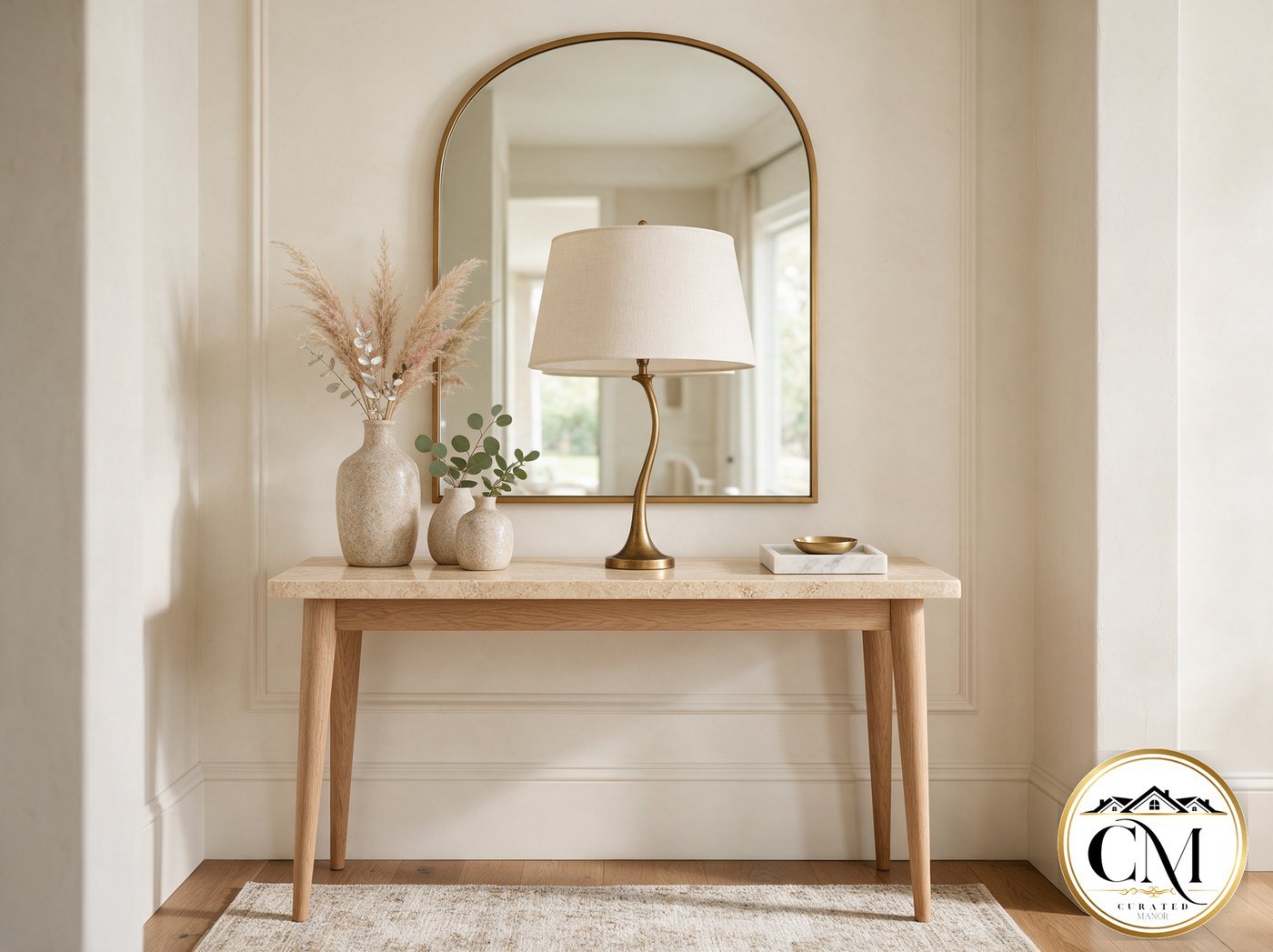
And skip matching your stone. A travertine table, travertine lamp and travertine bowl in identical tone reads like a set from a catalogue. Vary the tone and the finish; let them look gathered rather than bought together.
Where to take it next
Start with one substantial piece — usually the coffee table, because it’s the surface everyone in the room looks down at. Add a small stone object elsewhere so the material repeats. Then stop.
Two well-placed pieces of stone will do more for a room than six, and they’ll leave you the budget for the lighting, which is the other half of this.
Next: see The Layered Lighting Formula for how designers light a room around a focal surface, or browse the Marble’s Moment edit in the shop.