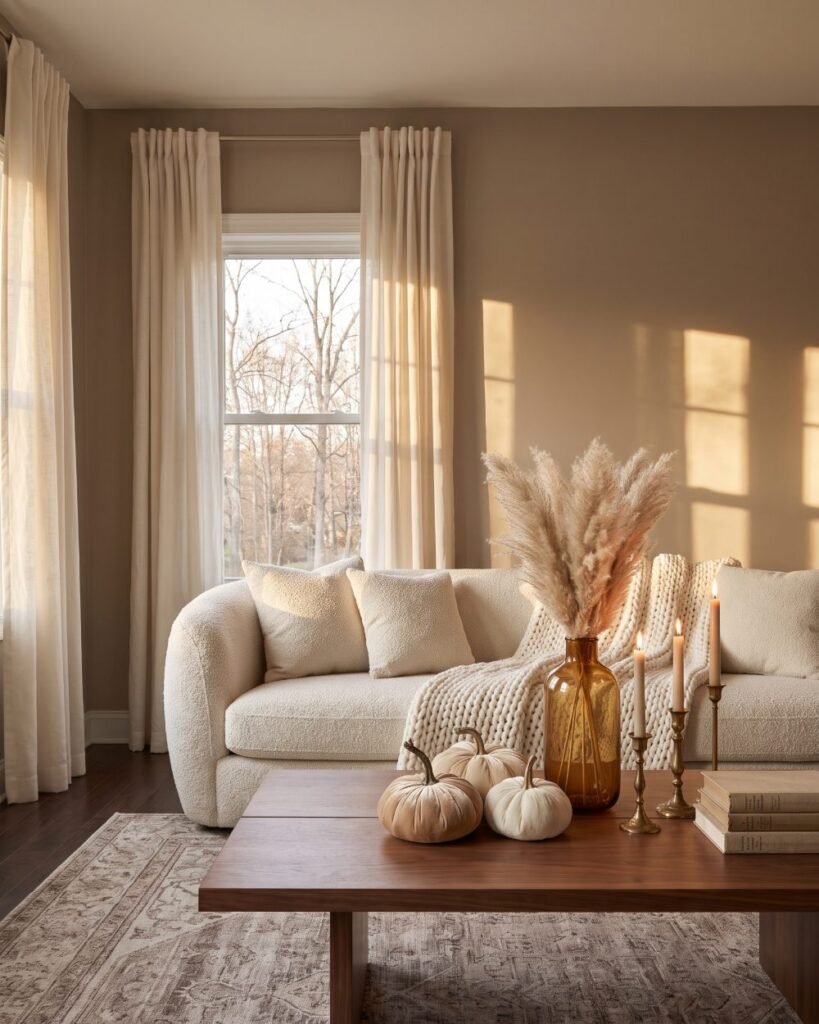
Autumn decorating has a default setting, and it’s orange. Orange pumpkins, orange leaves, orange candles, all arriving at once in early September and leaving again the moment November ends.
You don’t have to do any of it. The things that actually make a room feel like autumn are warmth, texture and lower light — none of which require a single orange object.

Autumn is a texture change, not a colour change
Think about what actually changes in a house in October. The light drops, you close the windows, you reach for something over your knees in the evening. The season is felt through weight and warmth far more than through colour.
So change the textures first. A heavier throw on the sofa. Something woolly underfoot. Linen swapped for a denser weave. Do that and the room reads as autumn even if the palette never moves.
Choose the warm end of your existing neutrals
You already have a palette. Autumn is the moment to lean into its warmer half rather than introduce a new colour entirely.
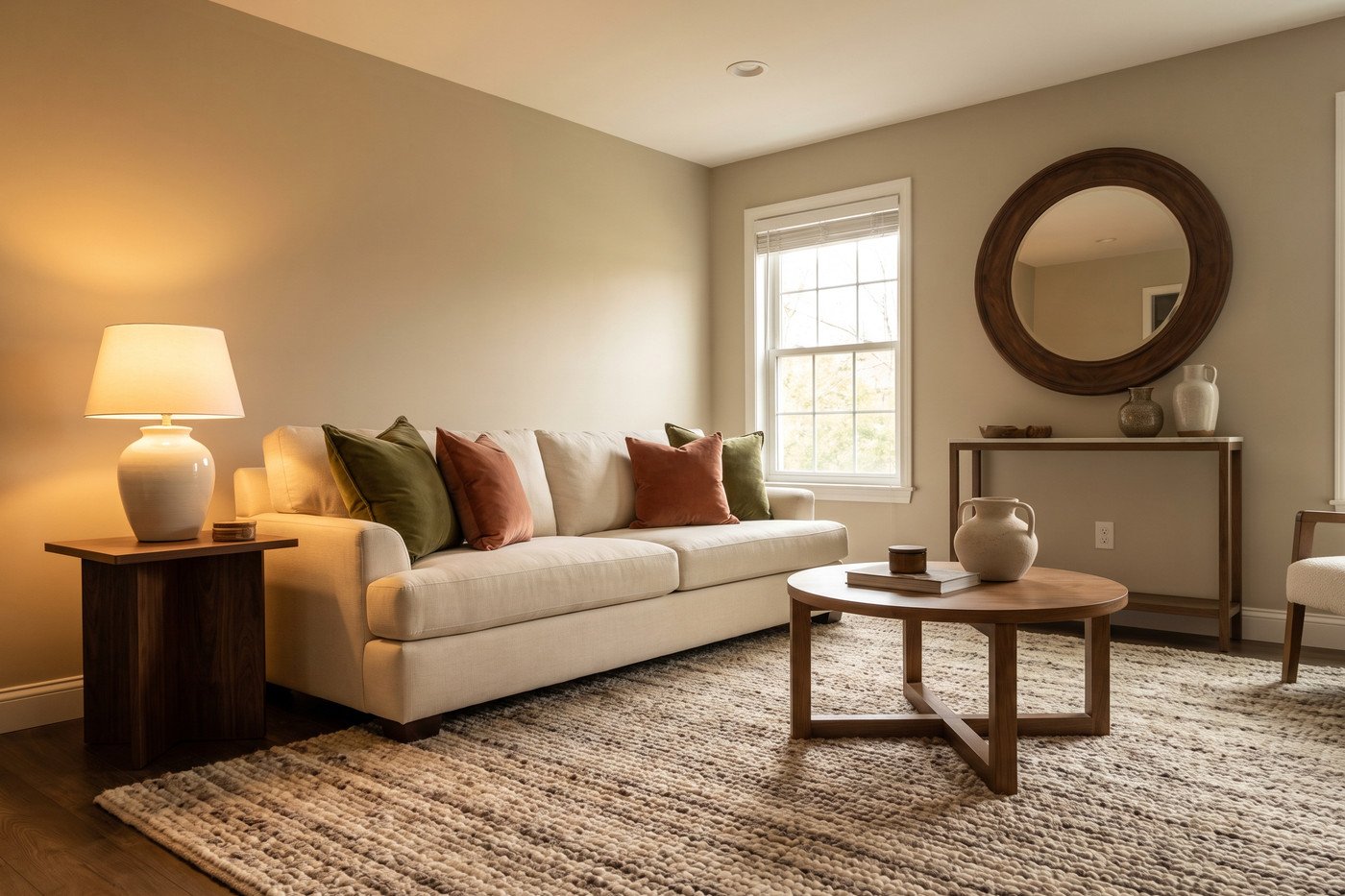
Champagne, bone, oatmeal, mushroom, camel, tobacco, dusty clay. All of these read seasonal without shouting, and none of them will look wrong in February when you can’t face packing it away. If your walls run cool, this is also the argument for warm neutral paint.
Curated Manor may earn a commission from qualifying purchases at no additional cost to you. As an Amazon Associate, I earn from qualifying purchases.
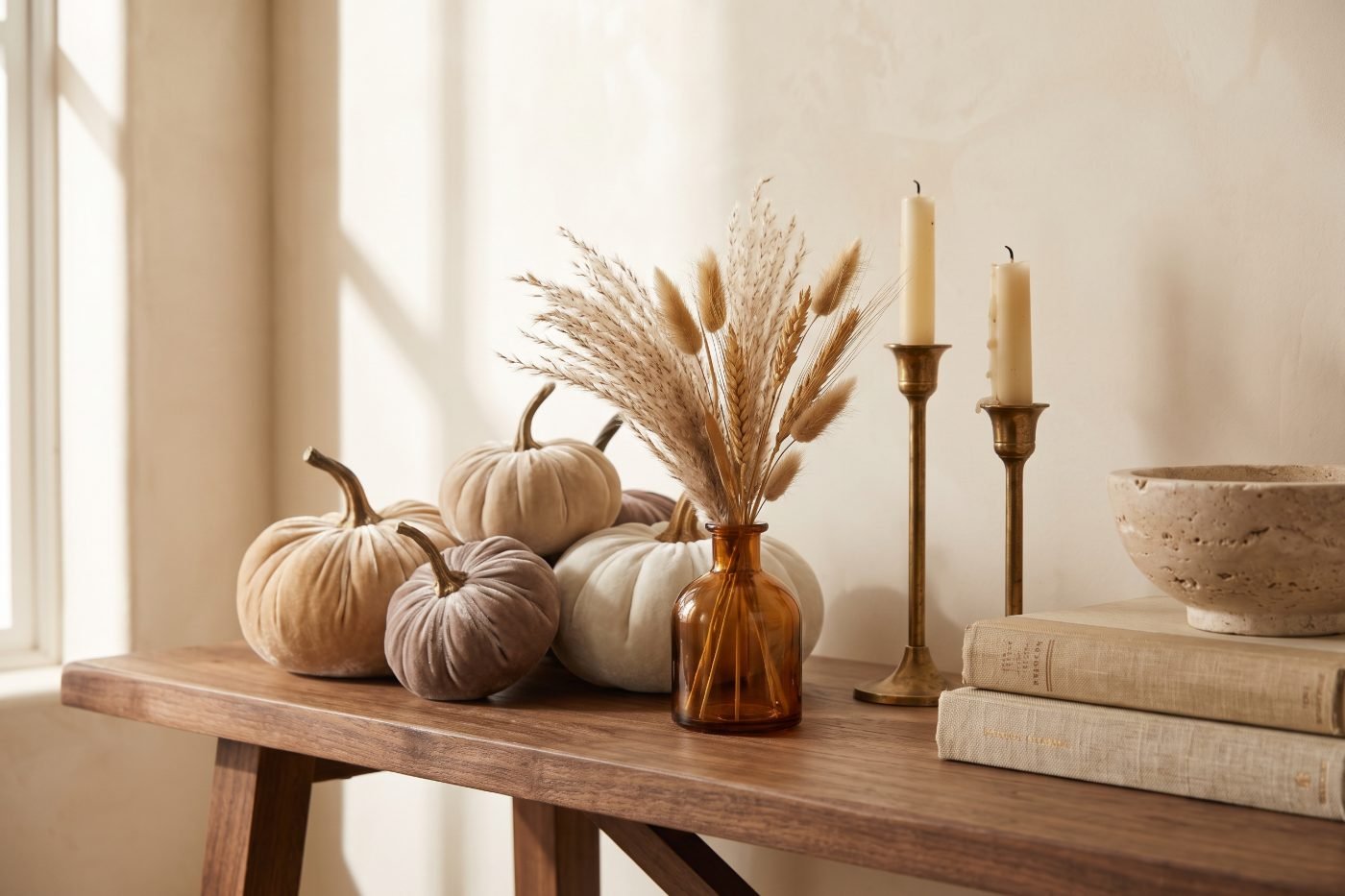
Velvet pumpkins are the obvious example. In orange they’re a costume; in champagne and bone velvet they’re just a soft sculptural object you can leave out until spring. Group them in odd numbers and vary the sizes.
Availability changes quickly on seasonal pieces, so check before you buy.
Dried beats fresh, and it beats plastic
Fresh flowers die in a week. Obvious fake foliage looks worse the longer it sits. Dried botanicals do neither.
Dried pampas grass and wheat have real texture, catch low afternoon light beautifully, and last for years. Put them somewhere tall so the silhouette reads across the room, and don’t overfill the vase — dried stems look best with air around them.
Amber glass bud vases are worth singling out. The colour does the seasonal work on its own, they’re small enough to cluster on a mantel or table, and the glass warms up under lamplight in a way clear glass doesn’t.
Everything mentioned in this guide, with the versions I’d actually buy. Seasonal stock moves fast, so check before you order.
Champagne velvet pumpkins, set of 8
Soft, sculptural and not orange. Group them in odd numbers and vary the sizes.
Dried pampas grass, 100 stems
Real texture that catches low light and lasts for years. Don’t overfill the vase.
Amber glass bud vases, set of 6
The colour does the seasonal work on its own, and they warm up under lamplight.
Brass taper candlesticks, set of 6
Varying heights on a console or mantel, and a flame at eye level once it’s dark at five.
Preserved wheat wreath, 21 inch
Loose and slightly asymmetric, so it reads gathered rather than shop-bought. Lasts years.
Candlelight is the whole season
The single biggest autumn lever in any house is turning the overhead light off earlier.
Aged brass candlesticks at varying heights on a console, mantel or table give you a flickering light source at eye level, which is exactly what a room needs once it’s dark at five. Brass is also the right metal for this season — it warms under flame in a way chrome never will.
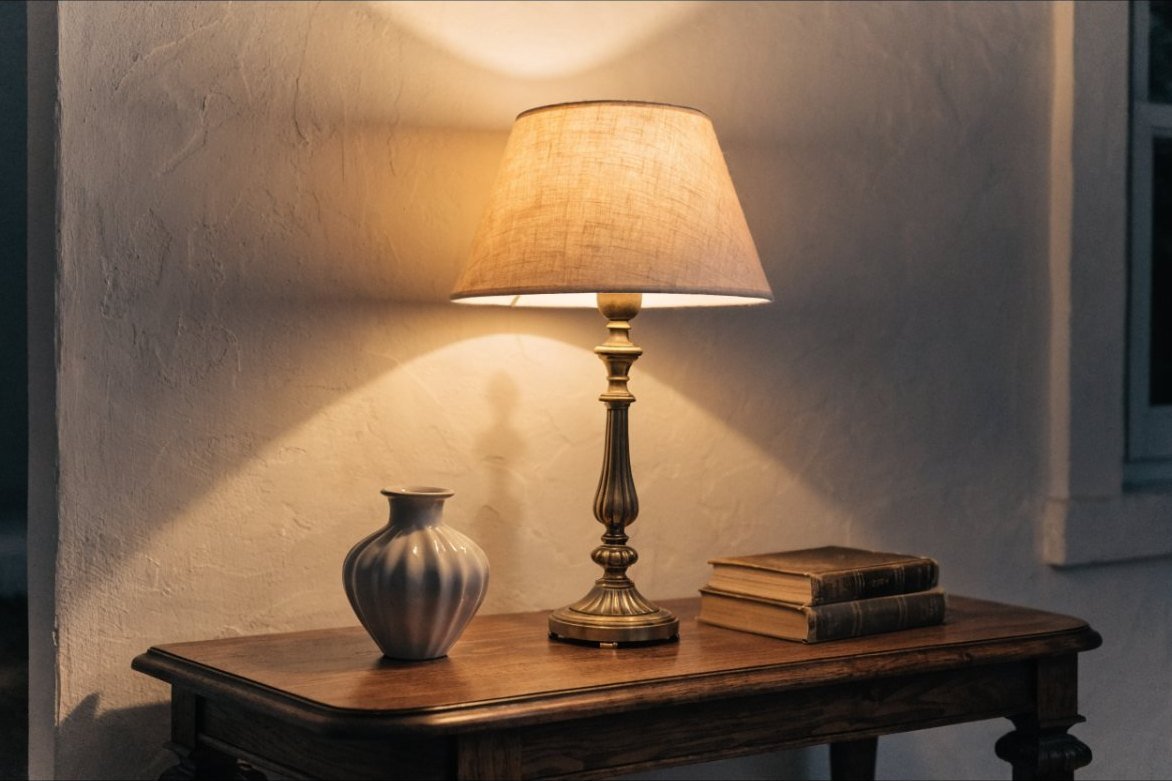
Pair that with lamps rather than the ceiling fixture. Our layered lighting formula covers how to build the layers properly, and it matters more from October onward than at any other time of year.
One thing at the door
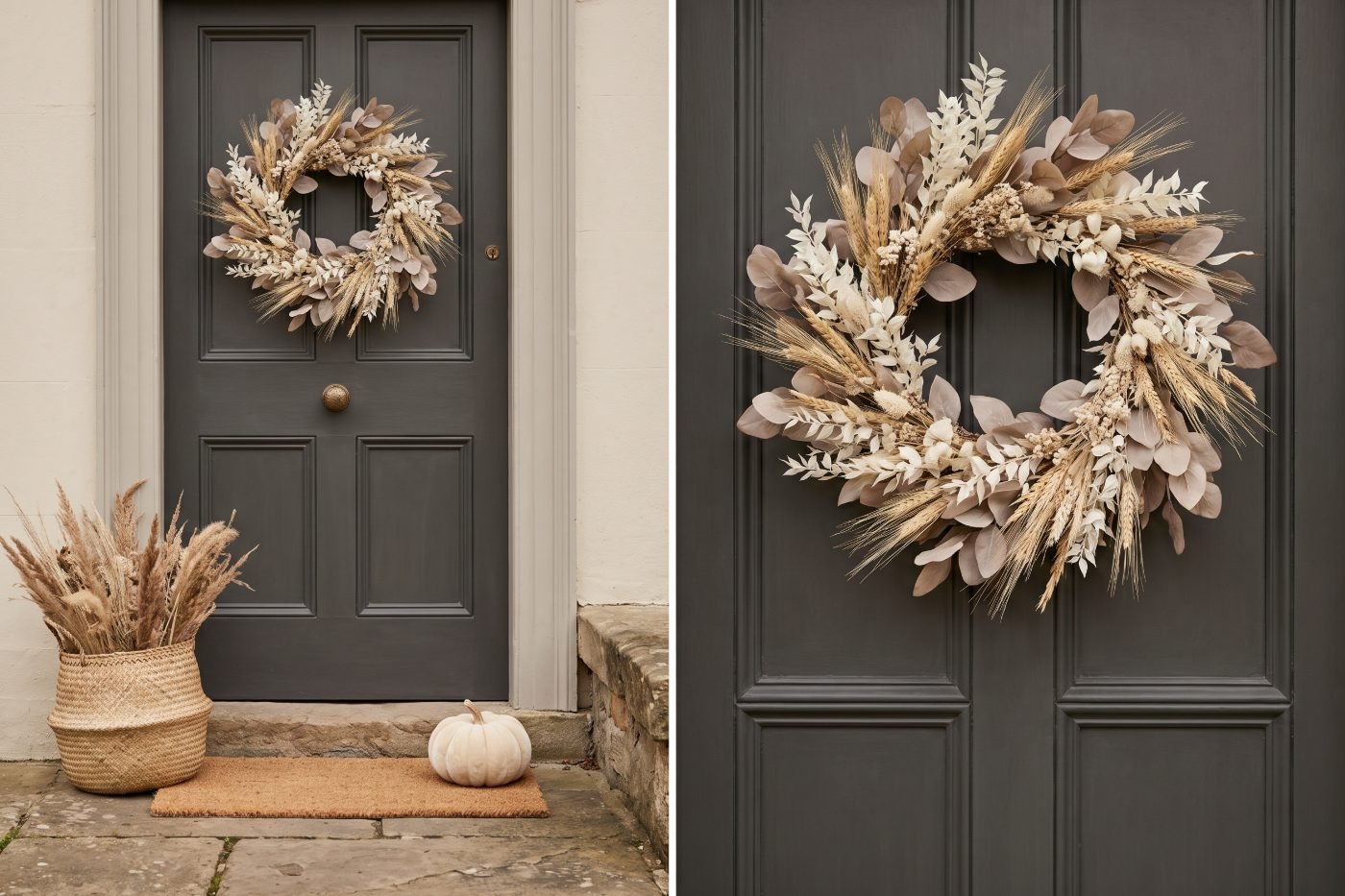
The entry is where a season should register first, and it’s the cheapest place to do it.
A preserved dried wreath of wheat and bleached botanicals does the job for several years rather than several weeks. Keep it loose and slightly asymmetric — a perfectly round, tightly packed wreath reads as shop-bought, while one with movement reads as gathered.
What to skip
Skip anything that only works for six weeks. Skip novelty — the signs, the slogans, the cartoon foliage. Skip buying a whole new colour scheme you’ll box up in December.
The test is simple: would this still look right on a grey Tuesday in January? If yes, buy it. If no, you’re renting a mood rather than decorating a home.
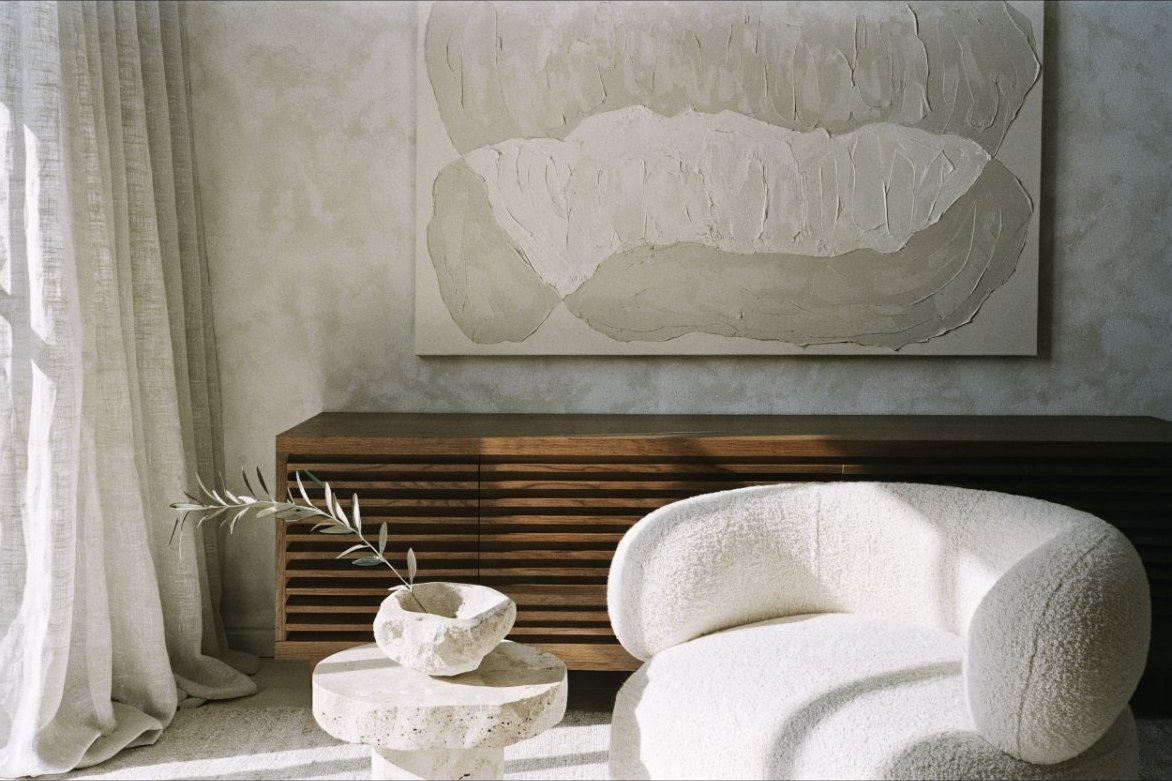
That’s the same principle behind collected luxury — build with things that stay, and let the season show up in texture and light instead.
Want the whole room mapped out? Start with our Room Recipes.
Keep the warmth going
 PaintWarm paint colours replacing white
 LightingThe layered lighting formula
 The lookCollected luxury
 The whole roomRoom Recipes
The free Curated Manor guide covers the five designer rules that make any room look more expensive. The one about lighting matters more from October onward than at any other time of year.